What is wastewater treatment in food factories? Fats and high-concentration organic matter [Basic Knowledge]
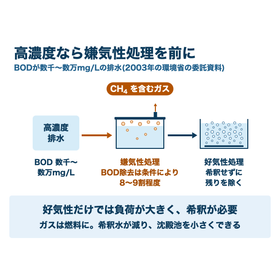
The wastewater from food factories varies significantly in water quality depending on the product. This explains the key points of treatment, including pretreatment for oils and solids, anaerobic treatment for high-concentration wastewater, and issues related to phosphorus deficiency.
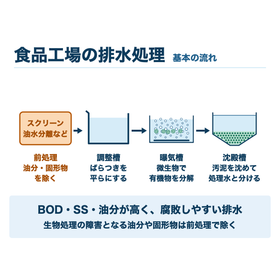
The wastewater from food factories varies in characteristics and quantity depending on the type of product and manufacturing method. A common feature among many food factories is that they have high levels of BOD, SS, and oil content, are prone to decay, and easily produce foul odors due to acid fermentation. The main water quality pollutants include BOD, COD, nitrogen, and phosphorus. In most cases, biological treatment using the action of microorganisms is employed for treatment. ■ What is the BOD level? The range of BOD in wastewater varies by product as follows: 1. Dairy products, etc.: 50–350 mg/L 2. Beer: 500–2000 mg/L 3. Raw bean paste: 500–4000 mg/L 4. Whiskey, shochu, etc.: 600–92000 mg/L Even within the same food factory, there can be significant differences depending on the product. ■ Some factories have varying wastewater depending on the season In factories such as prepared foods and beverages, the products and production volumes may change with the seasons, leading to significant changes in the characteristics and quantity of wastewater. There are also factories, like those producing starch or many sake breweries, that only discharge wastewater for a limited period each year. Please feel free to consult with us first.
- Company:トリイ
- Price:Other